PJ Masks™: Hero Academy
- 3.6
- Rating
- 10.00M
- Installs
- Free
- Price
 Analysis by App-foxy
When I tested PJ Masks™: Hero Academy, I found a children’s game that works best as a short, guided activity rather than a deep adventure to disappear into for an afternoon. The familiar PJ Masks setting gives it an immediate advantage with younger players, while the educational label points toward simple learning through play instead of a conventional action game. I would place it in the category of accessible, character-led entertainment for children who enjoy making choices, completing small challenges, and seeing recognizable heroes on screen.
That distinction matters in a shared household. A child can pick it up while a parent is nearby, play for a little while, and hand the device back without needing a complicated explanation. I would not choose it for a family looking for a competitive multiplayer experience or a long-form game with a substantial story. I would choose it when the goal is a friendly, low-pressure activity that fits between dinner, travel, or a quiet break.
How it fits into everyday family use
I’d treat this game as a planned, short activity rather than a distraction to hand over automatically. Thinking about where it fits in a family routine also makes it easier to judge whether its character-led atmosphere and pace suit your child, which is the next thing I’d consider.
You May Also Like

 Blood Strike: 2.5 Anniversary
Blood Strike’s Loadouts Turn Every Drop Into a Tactical Gamble
A close look at Blood Strike’s custom loadouts: how fast access to signature weapons reshapes its battle royale rhythm, rewards preparation, and narrows the gap between fights.

 Pandora - Music & Podcasts
Pandora’s Music Is Easy to Start, but Harder to Recover
Pandora’s strength is its low-effort path from a seed to a station. Its weak spot is how much confidence it asks you to place in connection, setup, and quiet recovery.

 8 Ball Pool
 Is Built on Rivalries, Rematches, and Routine
A close look at the rivalries, rematches, shared routines, and unanswered safety questions that turn a quick pool match into a persistent mobile community.

 Samsung Music
’s Quiet Strength Is Playing What You Already Own
Its reach comes less from spectacle than from dependable access to a personal library. That simplicity is both the app’s strongest retention engine and its ceiling.

 AccuWeather: Weather Radar
AccuWeather Review: A Quick, Clear Forecast for Everyday Decisions
For everyday plans, the best forecast is the one you can understand quickly. AccuWeather makes rain timing, radar, and local conditions easy to act on, with a few trade-offs.

 Hill Climb Racing
Why Hill Climb Racing Still Turns Crashes Into One More Run
A tiny car, a bumpy hill and one more upgrade: Hill Climb Racing keeps resurfacing because its simple chaos makes every near-miss feel personal.
More From Our News Desk



A practical shared-device scenario
Imagine a tablet being passed between siblings during a waiting-room visit. One child wants to play as a PJ Masks character, while another is watching and commenting from beside them. This is where the game’s recognizable theme helps: even a child who is not holding the device can understand what is happening without learning a large set of fictional rules first. In my experience, that makes it easier to use casually than a more abstract educational title.
The best sessions are probably short and intentional. I would let a child explore a challenge, then pause before the activity becomes repetitive. That approach also makes the game easier to fit into a shared schedule. It is not something I would leave running as background entertainment for a long stretch, especially because younger players can quickly move from engaged to restless when the pattern of play starts feeling familiar.
For a parent, the useful point is not simply that the game is free to start. It is that the theme creates a natural invitation to talk. After a round, I could ask why a character made a particular choice, what the child noticed first, or how they would solve the next situation. Those small conversations turn a screen session into a more social activity without pretending that the game replaces hands-on learning.
What the first setup means on a family device
The game is free, but purchases are available from $3.99 to $12.99 per item. On a device used by several people, I would handle that part before giving it to a child. The important household boundary is simple: the adult should be the person who decides whether anything is bought. I would not rely on a child understanding the difference between progressing in a game and spending money, even when the purchase appears inside a familiar children’s title.
My preferred routine would be to install the game, open it once as the adult, and look through the early screens before handing over the device. That gives me a chance to see how the game introduces its activities and where purchase prompts appear. I would also explain to a child that tapping a button is not the same as asking for permission. This is a small conversation, but it prevents the shared-device problem where one player changes something that another family member later discovers.
I would also keep expectations clear about progress. If several children use the same device, they may not experience the game in exactly the same way, depending on how the game presents its activities and what is available at the time. I would avoid promising that every child can have a separate journey unless I had checked the current setup personally. Instead, I would treat the game as a common activity and encourage children to take turns, explain their choices, and leave the device in a predictable state.
Coordinating turns without making it feel like homework
Shared play can become frustrating when one child keeps the device and another feels pushed aside. PJ Masks: Hero Academy is better suited to a simple turn-taking arrangement than to an open-ended “play until you are done” rule. I would use a natural stopping point, such as completing an activity, rather than interrupting in the middle of a challenge. That makes the handover feel fairer and gives the next child a clear starting moment.
A useful trick is to make the waiting child part of the decision. One child can hold the device while the other suggests which character or action to try next. This does not turn the game into multiplayer, and I would not describe it as such, but it gives both children a role. It also reveals whether the game supports conversation well: if the on-screen choices are understandable, a nearby child can participate without touching anything.
For siblings with different confidence levels, I would avoid letting the fastest player become the permanent guide. A younger or less experienced child should have time to make mistakes without someone immediately taking over. The game’s approachable presentation is helpful here, but the household rule still matters more than the software. I found that a short turn with patient commentary is more enjoyable than a longer turn controlled by the child who already knows what to do.
Educational value in the real world
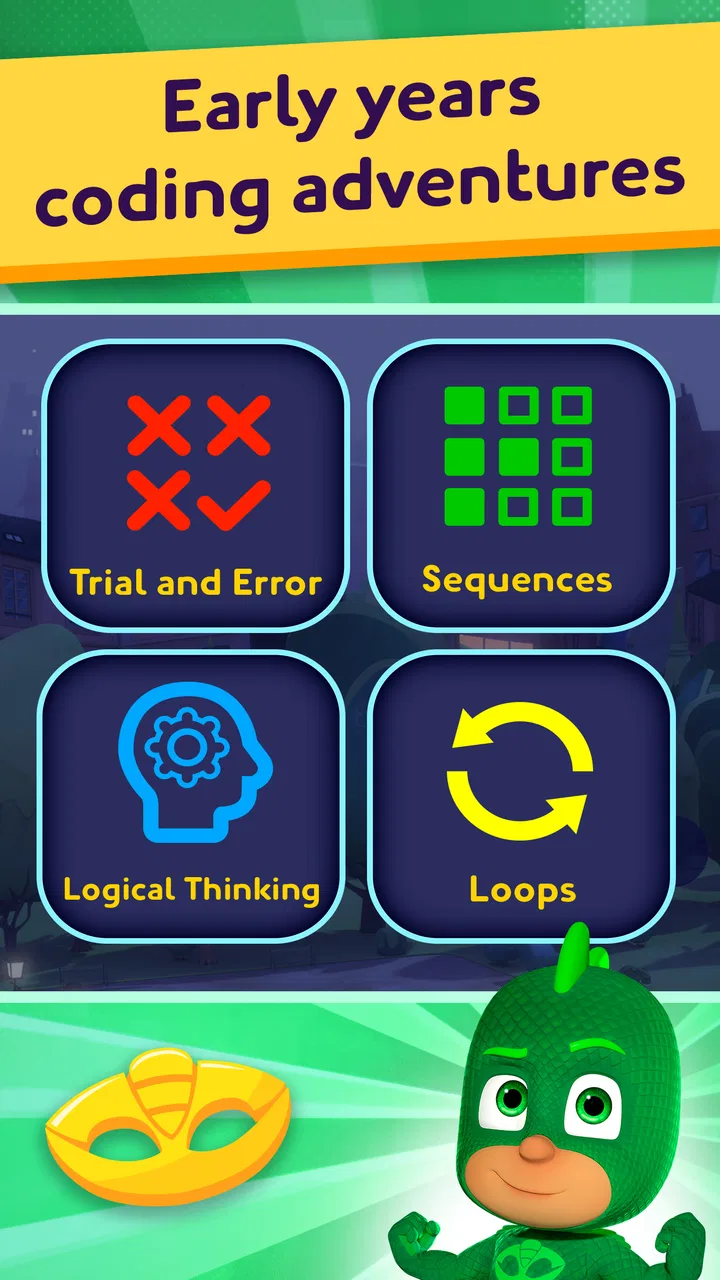
The educational category should be read sensibly. This is learning through simple interaction and problem-solving, not a replacement for reading practice, schoolwork, or a structured lesson. I would use it as a change of pace after a child has finished a more demanding task, or as a gentle activity during travel. The value comes from asking the child to notice, choose, and respond, rather than from expecting the game to teach a complete subject.
That makes it especially suitable for children who resist formal learning apps. A bright hero theme can make a small challenge feel less like an exercise. On the other hand, a child who wants clear academic progression, spelling drills, arithmetic practice, or detailed feedback should probably use a dedicated learning app instead. Those alternatives are more focused and easier for an adult to evaluate against a specific educational goal.
I would also pay attention to whether the child is thinking independently or simply tapping through familiar patterns. If the child can explain why a choice worked, the activity is doing more than occupying their hands. If they are rushing through without looking, I would pause and talk through the screen rather than assuming more play will produce more learning. That is one of the most important trade-offs: the game can support engagement, but the adult still provides the context.
Age context and trust
The Everyone age rating makes the game an obvious candidate for younger players, and the PJ Masks theme is clearly aimed at children who already know the characters. Still, an age label is not a substitute for knowing a particular child. Some children will enjoy the straightforward presentation, while others will find it too easy or too repetitive once the novelty fades.
I would introduce it to a child who likes guided challenges and recognizable characters, especially if they are comfortable learning by trying rather than reading long instructions. I would be more cautious with a child who becomes upset when a device changes screens, when a turn ends, or when an option is unavailable. The game may be friendly in tone, but every child reacts differently to prompts, repetition, and the limits of a shared screen.
Trust also means being honest about what the game is. I would tell a child that it is a game with learning elements, not a private digital tutor or a reward they can use without an adult nearby. That wording helps prevent inflated expectations and makes it easier to stop playing without an argument. In a household with younger children, I would keep the first few sessions supervised, then decide whether the child understands the controls and the family’s rules well enough to play more independently.
The developer is Scary Beasties Limited, and the game has been available since April 6, 2020. Its current version is 2.1.7, and it runs on Android devices using version 5.1 or later. Those details make it relevant for families using an older spare phone or tablet, although I would still check the actual device before planning a trip around it. A game can meet the operating-system requirement and still feel less comfortable on a small screen or an aging device.
Where it stands beside familiar alternatives
Compared with a traditional cartoon video, this game gives a child something to do rather than only something to watch. The child has to react and make choices, which creates more involvement. Compared with a dedicated educational app, however, it is less likely to provide a carefully organized curriculum or a clear record of academic progress. Compared with a larger adventure game, it is easier to approach but offers less depth for older or highly experienced players.
That middle position is its strongest use case. If I wanted a calm, character-based activity for a young child, I would consider it before a complicated adventure title. If I wanted to build a daily study habit, I would choose a specialist learning app. If I wanted siblings to play together competitively, I would look for a game designed around shared controls or multiplayer interaction instead of trying to turn this one into something it is not.
The free entry point also changes the comparison. A family can try the basic experience without committing to a purchase, but the available in-app items mean I would still treat installation as the beginning of a decision, not the end of one. The right question is not only whether the child likes the characters. It is whether the available play is satisfying without spending, and whether the household is comfortable with the way optional items are presented.
Small habits that improve the experience
I would begin with the sound at a comfortable level and keep the device within reach of an adult during the first session. That is not because the game needs a complicated setup, but because a parent can quickly see whether the child understands the interaction or is tapping randomly. Watching the first few minutes also helps identify whether the game suits the child’s attention span.
For travel, I would open the game before leaving home rather than introducing it for the first time in a crowded place. A child who needs help at every screen can make a supposedly convenient activity difficult when the adult is also managing bags, tickets, or another child. Testing it in a calm room lets me decide whether it is genuinely useful for that particular situation.
For siblings, I would agree on the order of turns before launching the game and use completed activities as handover points. For a child who tends to rush, I would ask them to describe the goal before tapping. For a child who loses interest quickly, I would stop while the session is still positive instead of pushing toward a longer play period. These habits are simple, but they make a bigger difference than treating the game as an automatic solution to boredom.
Limitations I would consider before installing
The average rating is 3.6 from around 26 thousand ratings, with about 210 written reviews. I would read that as a sign to keep expectations measured rather than assuming universal satisfaction. The game may be a good match for a particular young fan while still feeling limited to families seeking more variety, stronger educational structure, or longer-term progression.
Repetition is the main concern I would raise. Character familiarity can carry a child through the opening sessions, but it may not be enough once the child has understood the basic rhythm. This is not necessarily a flaw for a short activity; it becomes a problem when a parent expects one free game to provide weeks of fresh entertainment. I would rotate it with books, creative play, outdoor time, and other games instead of making it the default option.
The purchase range is another practical limitation for shared devices. Even when the adult has no intention of buying anything, the presence of optional items can interrupt the experience or create requests from children who want to unlock more. I would decide in advance how to answer those requests. A calm “not today” is easier than negotiating after a child has already become invested in a particular option.
Finally, the game’s appeal depends heavily on the child’s relationship with PJ Masks. A child who does not know or care about the characters may not find the presentation as motivating as a neutral puzzle game. In that case, a different educational title with less emphasis on a television-style theme could be a better choice. The recognizable cast is an advantage, but it is also the reason the game is not equally persuasive for every family.
My household verdict
I see PJ Masks™: Hero Academy as a useful small addition to a family device, not as the main learning tool or the centerpiece of a child’s game collection. It works when a young fan wants a guided activity, when an adult can set clear boundaries around optional purchases, and when siblings are willing to share through short, organized turns. The free price makes trying it straightforward, while the Everyone rating keeps it within the range many families will consider for younger children.
I would recommend it to parents who want a recognizable theme, simple interaction, and an easy conversation starter. I would skip it for children who need advanced challenges, for households looking specifically for multiplayer play, or for adults searching for measurable academic instruction. I would also avoid presenting it as an unattended solution to screen-time arguments.
My final recommendation is to install it with a plan: test the opening experience yourself, establish the purchase rule, decide how turns will work, and watch whether the child is actually thinking about the challenges. Used that way, the game can earn its place as a pleasant shared-device activity. Its best quality is not unlimited depth; it is the way a familiar hero theme can make a short, manageable learning-through-play session feel inviting.
FAQs for PJ Masks™: Hero Academy
01What is PJ Masks™: Hero Academy about?
PJ Masks™: Hero Academy is an educational game designed for young children, particularly fans of the popular PJ Masks TV show. The game focuses on teaching basic math concepts and problem-solving skills through engaging activities and challenges. Players join their favorite PJ Masks heroes—Catboy, Owlette, and Gekko—in a series of missions to save the day.
02Is PJ Masks™: Hero Academy suitable for all ages?
PJ Masks™: Hero Academy is primarily designed for young children, typically ages 3 to 7. The game features age-appropriate puzzles and missions that are easy to understand and complete. While older children might find the game less challenging, it's perfect for young fans of the show who are just beginning to learn math and problem-solving.
03Does PJ Masks™: Hero Academy require an internet connection?
PJ Masks™: Hero Academy can be played offline, making it convenient for kids to enjoy the game without needing a constant internet connection. However, some features, such as updates or additional content, might require an internet connection to be accessed or downloaded. This means parents can easily let their kids play without worry about connectivity.
04Are there in-app purchases in PJ Masks™: Hero Academy?
Yes, PJ Masks™: Hero Academy includes in-app purchases. These typically offer additional content, such as new missions or characters. Parents should be aware of these options and manage settings as needed to prevent unauthorized purchases. The game is designed to be enjoyable without additional purchases, but they can enhance the experience.
05How does PJ Masks™: Hero Academy support learning?
PJ Masks™: Hero Academy supports learning by integrating educational content into its gameplay. The game focuses on developing math skills, such as counting, addition, and subtraction, as well as enhancing problem-solving abilities. Through interactive missions and puzzles, children are encouraged to think critically and use logic, all while having fun with their favorite characters.
Pros
- Engaging puzzles that improve problem-solving.
- Colorful graphics that appeal to young kids.
- Educational content paired with fun gameplay.
- Simple controls suitable for children.
- Includes popular characters from the show.
Cons
- Limited levels may not challenge older kids.
- In-app purchases can be frequent.
- Requires internet connection for some features.
- Repetitive gameplay might bore quickly.
- Not suitable for kids unfamiliar with the show.

PJ Masks™: Hero Academy
Gallery